
Accidental Philosophy

Why Fixing a Problem Sometimes Makes It Worse

I made a small dent in my car bumper last year. It was not big enough to warrant a fix. It was cosmetic.

But it was bothering me. Maybe it was a dent on my pride.

Months later, I covered it with a sticker.

That’s when people started noticing.

“Oh, there’s a dent? I never saw it before.”

How often does the fix highlight the issue more than the issue ever did?

By |2026-03-21T11:45:31+00:0031/01/2026|Accidental Philosophy|0 Comments

Use the Difficulty : Adversities to Opportunities

“Use the difficulty”.That was the advice Hollywood veteran Michael Caine received from a director when an unexpected challenge derailed a scene. It is also the principle that has driven human survival for over three million years. In this post I write about the 3 pivotal phases of human history that shaped our success and our failures

Use the difficulty, Michael Caine

In an interview, the Hollywood veteran actor, spoke about how he was asked to Use the difficulty  by his director, when he faced an unexpected challenge in a scene. Use the difficulty means using adversity to find a solution. Check it out here https://www.youtube.com/watch?v=GAB89fOdA-I

The ancient humans probably did just that. – Use the difficulty, every time they faced a situation where inaction or wrong step could have wiped the human species. How they responded is not just fascinating history. It is our own story, with lessons worth exploring.

The incredible human Journey 

Ever since their emergence, over 3 million years ago, the journey of early humans has been nothing short of fascinating. The volatile planet did not make this journey any easier for them with challenges like geological events and harsh weather conditions. They had to compete with predators for scarce food.  Shelter and safety were daily challenges. If these were not hard enough, as a young species, their cognitive abilities were not fully developed to cope with such harsh challenges. Furthermore, they were susceptible to diseases, making their existence even more precarious. The odds could not have been worse.  

Yet, they survived.

Along this arduous journey across thousands of years, they adapted and evolved. They learnt to use clothing, fire and stone tools.  Their hunting strategies and social collaboration skills improved. Their overall cognitive capabilities improved and humans were ready for the upcoming pivotal phases of our history, that would start with the Pleistocene Glaciation, marking the end of the last ice age, 12,000 years ago.

Human history is a testament to our species’ remarkable ability to adapt and thrive in the face of adversity. Our ancestors used the difficulties they faced and found innovative solutions to overcome them This remarkable journey of survival and evolution of early humans shaped the course of great civilizations. 

However, our history also serves as a poignant reminder of the impermanence of civilizations and the fickleness of our being, when we fail to adapt or fail to Use the difficulty

Three Pivotal Phases of human history 

In my personal view, three pivotal phases played a key role in shaping human history. These 3 phases provided opportunities equally loaded with adversities and vice versa. How the ancient humans responded holds facinating lessons worth remembering, 

1) The Icebreaker: 

The end of the last Ice Age led to rising sea levels and formation of rivers. The landscape changed and humans started settling near rivers and learned to live off them. This new environment and adaptation posed new challenges that the humans had never experienced before. In response, our ancestors not just developed innovative solutions to overcome these new difficulties, but actually Use the difficulty to their advantage.

When the rivers flooded from time to time they developed canals, levees, dikes to not just control the floods but to actually use them for agriculture. They also developed early warning systems to track water levels or a calendar system to predict the flood cycle. Such sophisticated systems of agriculture and irrigation systems revolutionized food production. This laid the foundation for the emergence of civilizations like the Indus Valley (IVC), Ancient Egypt and Sumer.

2) Leaving No Stone Unturned:  

The Neolithic period (Circa 10,000 to 4,000 (y.a) laid the foundation on which the remarkable history of our race would be built. The early human invention of polished stone during the stone age, was a game changer for a while but the limitations of stone posed  considerable challenges. 

Once again our future depended on how we responded. 

Yet again, they found solutions by actually using these difficulties. The limitations of stone were used to observe the properties of clay and develop lightweight potteries. The versatile pottery  eliminated the need for stone based containers to prepare, store food and store water. They also reduced the reliance on stone hearth & ovens for cooking.

If pottery transformed domestic life, the invention of the wheel (6,000 to 5,500 y.a) revolutionized transportation, enabled trade and enabled animal drawn plows for agriculture. Wheel was invented by observing the movement of round objects like rolling stones.

This period also saw symbolic expressions and rock carvings, which were the building blocks for  written communication that would be developed in a few 1000’s of years. 

These innovations accelerated human progress.

3) Putting ‘Metal to the Pedal’:

If the stone age created momentum to the human journey, then the discovery of metalworking, around 6,500 years ago propelled it forward at a rapid pace. The discovery of metalworking, such as copper, bronze and later iron led to advancements in agriculture, trade, and warfare. 

But metal working posed significant challenges. Metal ores were scarce, and extracting, processing, and shaping them required considerable skill and effort. Invention of new techniques like smelting & refining was used to overcome the challenges of extracting metal from ore. 

The early metals were brittle and this was overcome by creation of  alloys like bronze (copper+tin). 

The limitations of early tools and techniques drove the development of new tools, such as hammers, anvils, and tongs, which enabled more efficient and precise metalworking. 

Yet again, the early humans proved that the only way forward is to Use the difficulty

All three civilizations (IVC, Ancient Egypt, Sumer) developed unique urban designs, house architecture and various solutions to address the local challenges caused on account of unique  climatic conditions, nature of soil, available materials etc.

How The Mighty Have Fallen: 

Failing to Use the difficulty:

The world is an unforgiving place. The mighty empires of old, which once shone like beacons of adaptability, ingenuity and played a massive role in shaping the modern world, eventually succumbed to the ravages of time, leaving behind only remnants of their former glory.

The Indus Valley Civilization, with its sophisticated urban planning and advanced water management systems were impressive, but their inability to adapt to changing environmental conditions led to their downfall

The once-mighty Sumerians failed to manage their irrigation systems effectively, leading to soil salinization and decreased agricultural productivity. They gradually declined as their cities were ravaged by wars and environmental degradation. 

Ancient Egypt, with its towering pyramids and majestic temples, slowly crumbled under the weight of internal strife, external invasions, and the relentless march of the desert sands. Their over-reliance on Nile was also a major factor as they failed to keep up with the changes in flooding patterns of this mighty river. 

The Wheel Of Time: 

The Indus Valley, Sumerians, and Ancient Egypt attained glory with their ingenuity, keeping pace with the changes and more importantly, turning adversities to opportunities. But all of them eventually failed when they forgot the basics that made them successful. After thriving for thousands of years, they failed to adapt to environmental changes or internal conflicts or external threats leading to their decline.

There are many lessons that can be learned from the rise and fall of the 3 greatest civilizations of ancient times. Many great civilizations followed over the next thousands of years. Mycenean (3,600 to 3,100 y.a), Mayan (3,000 to 2,500 y.a), Mauryan Empire (2,346 to 2,209 y.a) Roman Empire (2,000 to 1,500 y.a), Gupta Empire (1,704 to 1,474 y.a), Inca (586 to 491 y.a), The Mughal Empire (498 to 167 y.a), Ottoman Empire (725 to 102 y.a).

However, a quick glance at their history will leave you disappointed because of how they met with the same fate as the 3 ancient civilizations . And all of them failed for similar reasons. Ancient Egypt and Sumer – environmental changes or internal conflicts or external threats.

The wheel of time has indeed made history repeat itself.

The Modern World

The world has come a long way from the last days of these ancient empires. Yet the reasons we grapple with today are the same that caused the downfall of these great empires.

Artificial Intelligence is reshaping how we think, work, and decide faster than any difficulty our ancestors ever faced. The ice age took thousands of years. The stone age took millennia. AI is taking weeks. We do not have the luxury of time this time.

And of course, we now have nuclear weapons and social media.

What can possibly go wrong?

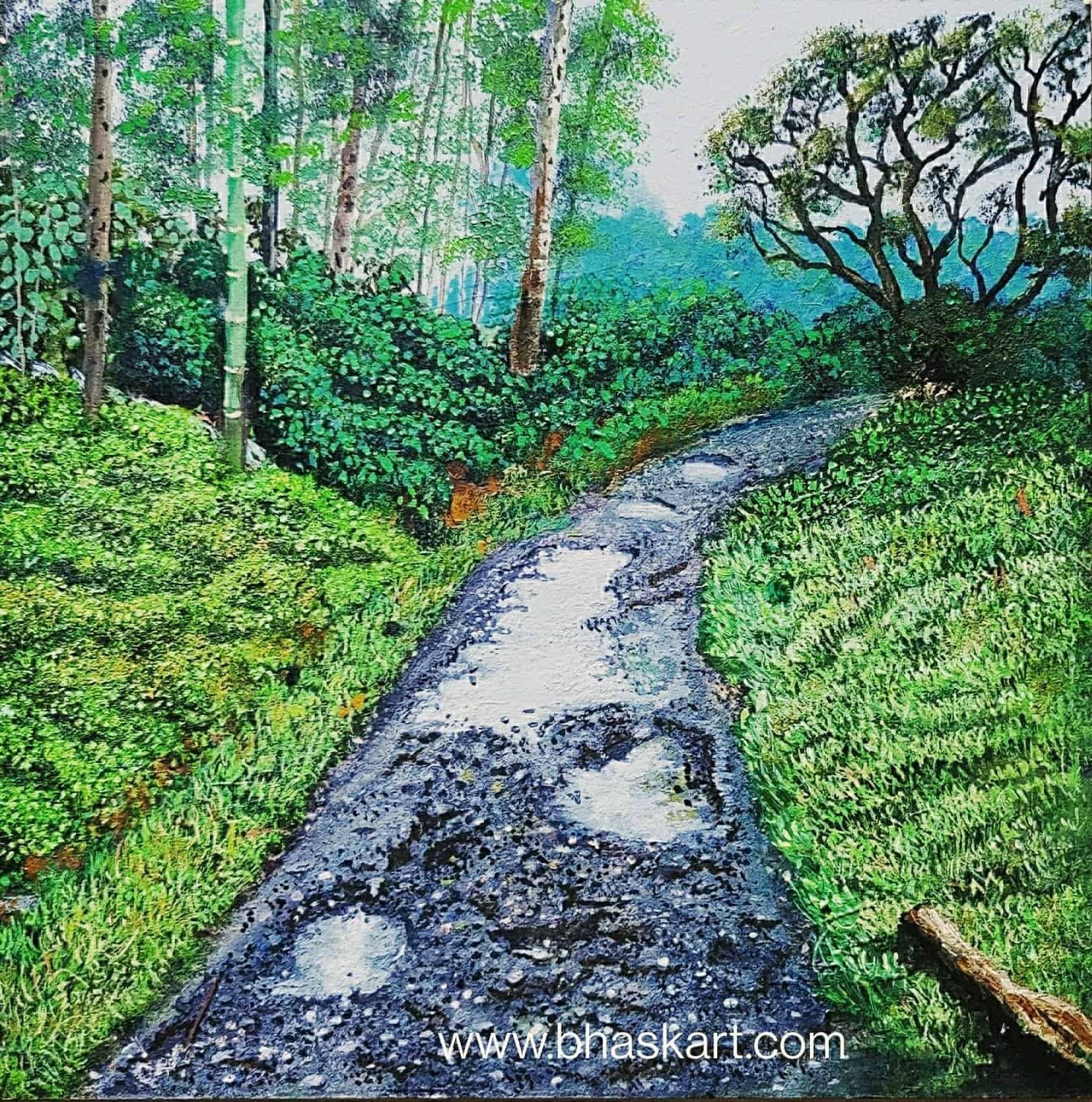
PS: I painted this during a vacation to a hill station. On a road like this, you have no option but to use the difficulty

Acrylic painting of a potholed filled road. Only way to navigate it is to use the difficulties

By |2026-06-14T10:16:01+00:0003/12/2024|Accidental Philosophy|14 Comments

The Mask of Sorrow

I have a dream, declared an ambitious heart.

If you can dream it, then I can achieve it challenged the cunning brain.

Aim bigger and go for more, egged the greedy mind.  

We are born to rule roared the ego.

The earth belongs to us

Our superior intelligence has undoubtedly given us the edge over the other species. But, naturally, this advantage has also given us the belief that the earth belongs only to us. Our world domination might still be a work in progress but this juggernaut has been gaining momentum. But, the fun part is, we even managed to get rid of the unnecessary nuisance of guilt and remorse along the way. So, we don’t regret our actions. Life was never this beautiful and comfortable. Who cares if animals don’t share this sentiment? The Earth itself might feel abused. Do we care? Of course not? After all, We are born to rule this planet, and rule we shall.

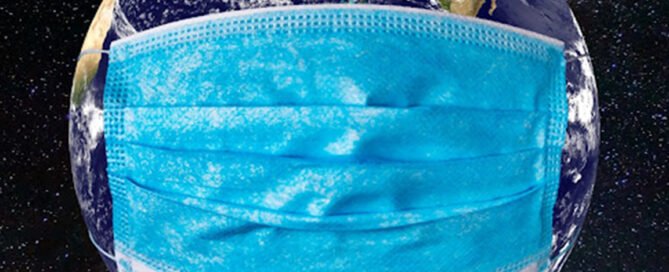
Mask of Sorrow

Where is your mask?

We were all set for another high octane ride this year with an air of invincibility and conviction of our destiny to reach the imagined future. But, unfortunately, the pride of our past success and the race towards the imagined future made us lose sight of the present. Sadly, we failed to notice that nature was secretly scheming to put us in place. We even ignored the clues that nature was trying to give us. But, more importantly, we failed to listen to a chilling question that nature was asking us, ‘Where is your mask’?

Natures equal and opposite reaction

Why would we pay heed? After all, we are invincible, and we fear nothing. Do we? Since the beginning of this year, that ominous question of where your mask kept ringing in the air. But most countries were busy squabbling over who created this menace rather than acting swiftly.    We even challenged the social distancing measures and got too close for comfort with each other.

Life is all about the trade-off. And as Newton would say, every action has an equal and opposite reaction. Progress and Development give us comfort but also the side effects in equal measure.  But the rapid increase in human avarice sadly matched the advancement in technology. The result was a powerful backlash that we couldn’t handle. We might be able to destroy nature but we can’t beat the laws of nature. Can we?

Screeching halt

Alas, the juggernaut has come to a screeching halt. It has brought the invincible humans to their knees. We could achieve anything that we could imagine, and we could destroy anything that we see. But nature played it smartly and unfairly by unfurling an invisible enemy. In just a matter of 2 months, we are shown our place in the pecking order. We are scared, locked down, and socially distanced. The inefficiencies of some of the most influential leaders are exposed. Nations are clueless. Ambitions have given way to mere survival. We finally listened to nature and picked up our masks.

Mask of Sorrow

The Mask of sorrow

We forced ourselves to put a mask around our ego, desire, arrogance, and cockiness. So much so, we are desperately trying to cover our fears and uncertainties behind the mask. Yet, behind this small piece of cover, we learn the power of humility and the truth of who we are. This pandemic has uncovered a simple, peaceful world that we long forgot. It reveals what a sad, insignificant, and fragile species we are. An invisible enemy mortifies the invincible humanity.

Under this three-layered piece of cloth, we silently utter some long-forgotten prayers to save us from this misery. The mask is not just a cover to protect us. It is a cover that reveals the truth – a sad, bitter one that we are not as indestructible as we thought we were.

Will we learn?

Has nature completed its humiliation? The mask might help many humans survive this threat. But will it save humanity? Will we learn from the truth we are discovering about ourselves behind these masks?

Or will nature force us to wear this mask of sorrow again?

By |2026-05-01T03:19:01+00:0022/09/2021|Accidental Philosophy|0 Comments

Can you hear me now?

In these days of work from home and online meetings, Can you hear me now ? has become an integral part of our lives. Do you remember going through a 10-minute call without this coming up?

Somehow, this Can you hear me now, question silences unwanted noises? The inaudible and garbled voice from the other side suddenly becomes loud and clear. Be it a lousy home Wi-Fi network, a bad Bluetooth hands-free, or even a screaming kid in the background – These words seem to fix everything. Do you recall responding negatively to this question ever? Can you hear me now probably is the loudest and clearest sounding part of most online conversations?

Can you hear me now

Can you hear me now

Placebo Effect of Can you hear me now.

Can you hear me now is not just an apologetic enquiry but a much bigger mind game. It is not about fixing issues but about the placebo effect of these words that makes all the difference. It is your way of showing that you care to the person who cannot hear your voice. Can you hear me now shows that you listened to the complaint. And more often than not, that is all it takes to solve an issue.

Do not feel bad when your voice is not heard. Do not feel apologetic about it. Instead, feel proud because you have the elixir that can solve the problem. All you have to do is to ask confidently,

Can you hear me?

By |2026-04-30T06:14:08+00:0009/09/2021|Accidental Philosophy|0 Comments
Go to Top