Perspectives on AI

Perspectives on AI talks about subjects like how every technology before AI changed what we could do. AI is the first one that operates in the same space as how we think. That distinction matters and it is one most people skip over.

At BhaskART, I explore AI not as a technologist selling a future, but as someone asking questions from the grey zone between strategy and creativity. One is not the enemy of Zero — and in AI, that means the machine’s answer and your judgment aren’t rivals. They’re partners, if you know what you’re looking at.

These posts are my Perspectives on AI — its promise, its limits, and the thinking traps we fall into along the way.
Better AI Output Starts With Better Input: A Painter’s Perspective

How do I get better AI Output?

This has been question on everyone’s mind since LLM’s arrived.

What started off as FOMO, became a fascination and very soon became an essential part of daily life. The dependency on AI for even drafting a simple email or WhatsApp message is part disturbing and part smart. The jury is still out there on this.

How do I get better output from AI? The question itself is the problem.

It makes AI the driver and you the passenger taken on a ride. Or should I say, ‘token’ for a ride?

Every bad prompt. Every unnecessary word in your input. Every file you attached that was not needed. Every conversation you let run longer than the task required. All of it burning tokens faster than the response is delivering value.

A painting I did few years ago seemed to hold the real question we should be asking.

How do I give better inputs to AI?

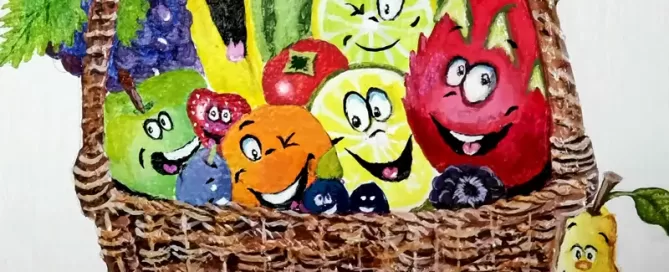
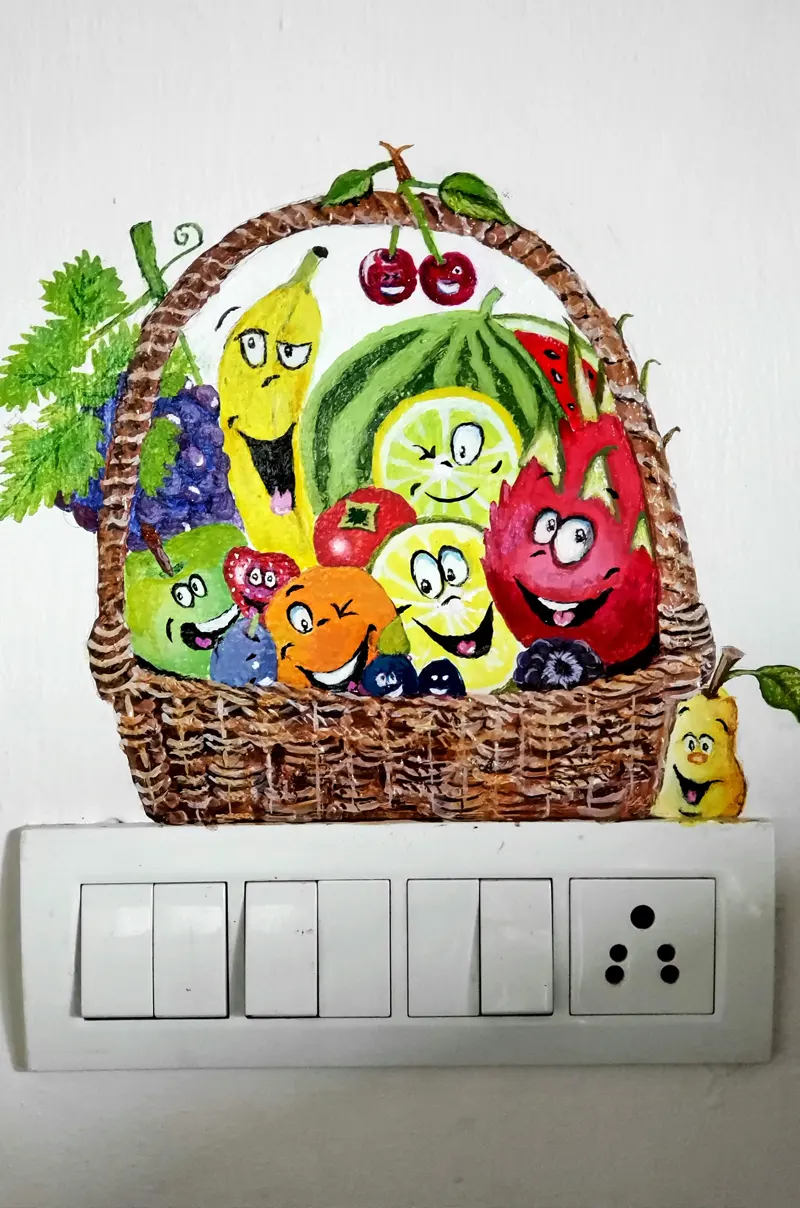
A basket overflowing with fruits. Each one demanding attention, all at once.

That’s what most prompts look like right now. Throw everything in. See what comes out. The basket is the prompt. The fruits are context you never needed, files that were not relevant, conversations running past their purpose, questions that have not been thought through.

More input doesn’t mean more value. Usually it means more noise.

When you paint, you do not load every colour onto the brush before a stroke. You choose. Deliberately. The discipline is not in having more colours. It is in knowing which one the painting needs right now.

It is in knowing which one the painting needs right now.The outputs will always be proportional to the quality of your thinking before you type.

One of the most important skills we can practice is discipline. The kind that asks: do I actually need to say this? Does the model need to know this? Is this conversation still serving the task, or is it now serving my uncertainty?

This is not a new skill AI demands. It is the same discipline that was always worth practicing.

Zero unnecessary tokens is not a target. It is a practice.

And the pear hanging outside the basket?

That is the thought you almost included. The context that nearly made it in. The extra paragraph you were about to paste.

Leave it outside. The basket is already full.

Colorful fruit basket with animated fruit characters, cheerful and vibrant artwork showing the importance of restraint in getting AI Output

Whimsical fruit basket painting featuring lively, expressive fruit characters in bright colors.

By |2026-06-12T02:36:08+00:0012/06/2026|Perspectives on AI|2 Comments

Vaibhav Suryavanshi is to IPL what AI is to the World

In the Cricket world, Vaibhav Suryavanshi, the 15 year old boy wonder batsman is toying with experienced and seasoned internal bowlers. In the business world, AI is reshaping the landscape at a rapid pace making seasoned professionals doubting their relevance. We are living in an exciting and scary times for sure.

I have not been watching IPL matches regularly for the past few years. It was getting too predictable for me. Shorter boundaries, powerful bats, longer hits and hapless bowlers.

But then, Vaibhav Suryavanshi, has taken this bowler bashing to a whole new level. It’s almost voyeuristic to watch this 15-year-old boy making seasoned international bowlers of repute, look pedestrian. Experience don’t matter. Reputation, even less. Every bowler and coach is left scratching their heads. Unlearn all that you have mastered over the years and learn entirely new techniques, is the name of the game.

Why does this sound too familiar?

Suryavanshi is doing to cricket what AI is doing to the business world. He is not just tonking the cricket ball but is mirroring life itself.

Seasoned professionals are having self-doubts like never before, their reputation counts very little, learning new ways is non-negotiable. And learn it fast because the LLM that you are trying to figure out will become obsolete with 20 new models in the market in a month. The boy will be past 100 in 30 odd balls.

What’s exciting and scary is that both are just kids yet. The chaos we are seeing right now? That’s them warming up.

Note: This painting is called ‘Rapids.’ The water does not negotiate with the rocks. It does not ask for permission. It simply moves. The rocks may have been there for centuries, but the water shapes them anyway. Suryavanshi bats the same way. AI works the same way. I did this oil on canvas after purchasing a video tutorial by Michael James Smith.

By |2026-05-24T03:25:25+00:0024/05/2026|Perspectives on AI|0 Comments

Every AI output is Paris in a wine glass.

I did an oil painting of Paris in a wine glass

“Is the moon inside the glass or behind it?”

A friend asked when I shared it.

“How does it matter?. It is a glass after all”, I responded.

But the question triggered something. The question about the moon was not about the moon at all. It was about how LLM’s work.

AI takes the entire internet and squeezes it into one answer. Years of research become a paragraph. All that knowledge, all that data, all those contradictions, squeezed into one neat paragraph. It is like pouring an entire city into a wine glass.

But here is the thing about my painting. The Eiffel Tower inside the glass is obviously not the real Eiffel Tower. It is a version of it. Filtered through curved glass and red wine. The proportions are slightly off. The colours are warmer than reality. The context of the city around it is gone. What you see is compelling, but it is not complete.

That is AI in 2026.

Every AI output is Paris through a wine glass. It looks right. It feels right. It might even be more beautiful than the original. But it has been filtered, compressed, and reframed. The mess, the complexity, the contradictions of the real city are missing.

It works as long as you know you are looking through a glass.

The danger is not AI getting things wrong. The danger is AI presenting a filtered view so confidently that we forget there is an entire city behind the glass that we are not seeing. After all, every AI output is Paris through a wine glass

We do not ask these questions because the glass is so beautiful.

Use AI. Look through the glass. Appreciate what it shows you. But never forget to look beyond it too.

Because there might be a more beautiful moon outside the glass than the one inside it.

Oil painting of Paris in a wine glass

By |2026-05-23T13:38:20+00:0005/05/2026|Perspectives on AI|0 Comments

Why AI Is Not One of the Technology Waves

Ten years ago, I wrote a blog post about the three Technology Waves  that changed the world. The internet was the first wave that connected people to information. Mobile was the second that put the world at our fingertips. IoT was promising to be the third, connecting everything to everything else.

Humans rode those waves well.

But what has arrived now is not a wave. It is the ocean itself.

Artificial Intelligence is the water in which all future waves will form. Every industry, every function, every role is being reshaped by it, and the speed of that reshaping has caught even the optimists off guard.

In that 2015 post, I wrote something that still holds true today.

Consumers will not fear the technology that they don’t understand. But will embrace the one that can seamlessly become a part of their life and help them too.

That sentence holds true for AI with far more accuracy.

People are having natural conversations with it without knowing or caring about the large language models behind the screen. That makes the adoption fast and effortless.

But here is where AI differs from every technology that came before it.

Every previous wave changed what you could do. The internet gave you access to information you could not reach before. Mobile gave you that access anywhere. IoT promised to connect objects so they could talk to each other. In every case, the technology extended your capability. But it stayed in its lane. The machine did the mechanical part. The human did the thinking. The boundary between the two was never in question.

AI is the first technology that operates in the same space as human thinking. It does not just give you a better tool and step aside. It produces work that looks like something a person made. A strategy document. A piece of writing. A design. An analysis. And it does it fast enough and well enough that you have to genuinely stop and ask yourself whether what it made is better than what you would have made.

That is why we feel excited and nervous, at the same time.

The excitement comes from the fact that your ceiling just got higher. You can do more, explore more, produce more than you ever could alone. The nervousness comes from the fact that the floor shifted. Every previous technology made you more valuable by making you more capable. AI is the first one that can do the work without you and still produce something good.

And that nervousness is legitimate. Not because AI is coming for your job. But because most professionals have never had to consciously answer the question of what they bring that a machine does not. Until now, nobody asked..

The first three waves changed how we work. This one is changing how we think about our own value. And the people who will thrive are not the ones who adopt AI the fastest. They are the ones who can clearly answer what they bring to the table that AI cannot, and then use AI to make that contribution even bigger.

We rode the first three waves successfully. This one is bigger than all of them combined. But the principle remains the same. The winners will not be those who understand the technology best. They will be those who adopt it most thoughtfully.

AI is not one of the Technology Waves but the ocean itself. An acrylic painting of a swirling wave

AI is not one of the  Technology Waves but the ocean itself. Acrylic painting of swirling wave

By |2026-05-24T06:26:45+00:0028/04/2026|Perspectives on AI|0 Comments

Why Organizations Struggle to Trust AI, Even When It Works

A question from the 1700s and an Instagram reel about the Andromeda Galaxy explain Organizations struggle to trust AI.

We recently heard of an AI building in three hours what a team had been working on for three months. By now, everyone knows AI can do this. Yet the moment felt uncomfortable. Not because it was shocking, but because someone said it out loud, that AI did it.

That discomfort is not an AI problem. It is a very old human problem.

In 1710, George Berkeley posed a question. If a tree falls in a forest and no one is around, did it make a sound? At its core, the question is simple. Can something be accepted as true without validation?

Most people have heard it and moved on. I did too, until an Instagram forward connected it to something far more current.

The video described a thought experiment about travelling to the Andromeda Galaxy, about 2.5 million light years away. If someone could travel close to the speed of light, the journey might feel short to them. But by the time they returned, millions of years would have passed on Earth. Everyone they knew would be gone. Perhaps even the human species.

So, with no one left to hear the story or validate it, did the journey truly happen?

This is exactly where we are with AI.

We need validation. So even when the AI output is strong, we tweak it, rewrite it, or present it as our own intuition. It works, because it is now validated by human intelligence.

Without that validation, it feels uncomfortable to accept it as truth.

The tree fell. Loudly. Clearly. Undeniably. But without someone in the forest to acknowledge it, we hesitate to accept that it made a sound.

The companies moving ahead are not the ones who fully trust AI. They are the ones who have reduced the amount of validation required before acting. They test, they iterate, and they own the outcome, even when the work was not produced in the traditional way.

They do not wait for the forest to fill up.

They see a fallen tree, decide it made a sound, and move.

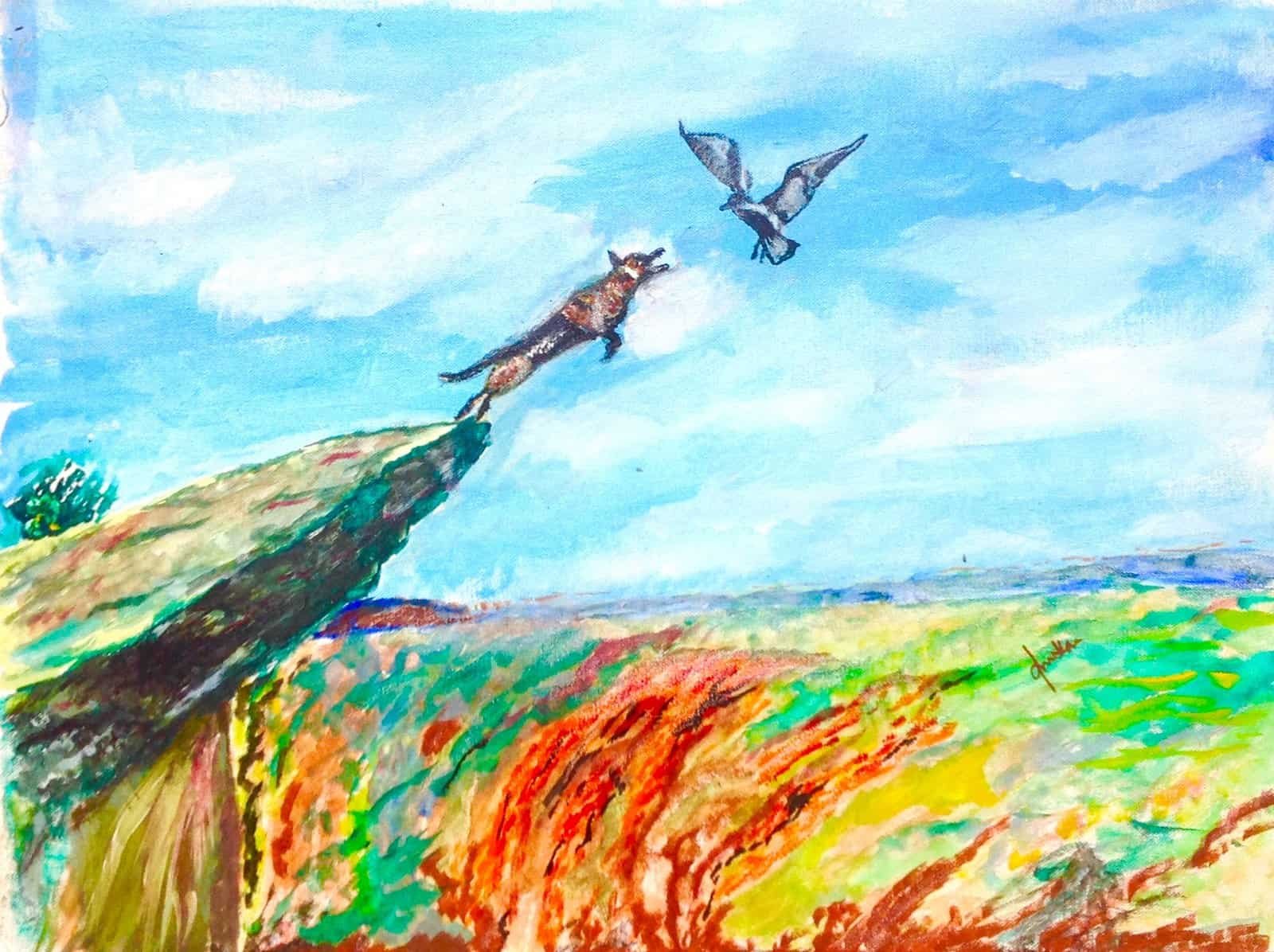
Note: This painting is the first oil work I created 10 years ago, titled “The edge is not the end.” The fox does not wait for validation of its strategy. It sees the bird and jumps. Ten years later, the world has changed, but the instinct to move forward has not. Wait for validation and AI will move ahead without you. Take the leap. The edge is often the beginning.


Original painting by BhaskART showing a fox committing to a leap — not blind faith, but deliberate action despite uncertainty — mirroring how organizations must approach AI adoption

By |2026-05-05T10:58:22+00:0023/04/2026|Perspectives on AI|0 Comments

Will the AI Bubble Burst? Why History Says No

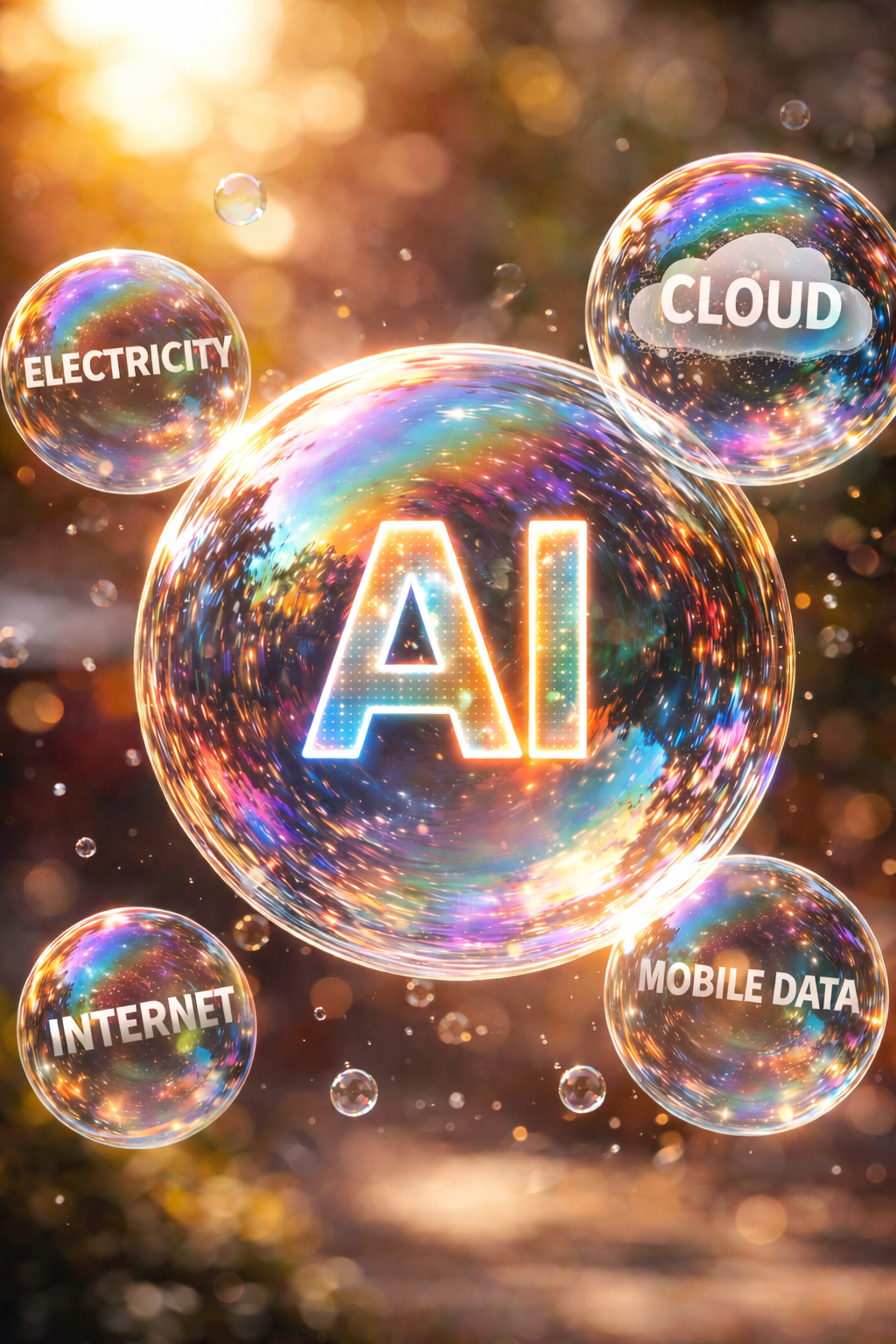
AI bubble with cloud, internet, mobile data, and electricity labels.

Image Courtesy:ChatGPT

Will the AI bubble burst? History says no. Every major technology, from electricity to cloud computing, was declared a doomed bubble before it became essential infrastructure. AI is following the same pattern.

Exploring the Question: Will the AI Bubble Burst

Lately, conversations about AI have begun to change tone. Will this AI bubble burst or will it sustAIn? Will the AI bubble burst is a question many are pondering. Many experts are asking, ‘Will the AI bubble burst?’ as they analyze the current landscape.

After the initial euphoria, awe, amazement, and fear of missing out, reality is starting to set in. Enterprises are realizing that while large language models are powerful, they are also expensive. Training costs are high, but inference costs are often the real surprise. Every prompt, every response, and every token carries a compute cost. GPU time, energy consumption, latency, and cloud bills scale linearly with usage. These costs accumulate quietly in the background.

As we consider the future, one cannot help but wonder: will the AI bubble burst in the next few years, or will we continue to see growth? Many are optimistic that the potential of AI will keep the bubble from bursting.

As a result, a growing chorus of experts is predicting that the AI bubble is about to burst.

The volume of articles and analyst reports warning of an imminent collapse continues to rise. Many analysts appear to be betting on AI’s failure. This may sound dramatic, but it also sounds familiar.

We have seen this pattern before, not once or twice, but countless times.

For thousands of years, humanity has greeted every meaningful technological shift with the same mix of fascination, anxiety, and firm conviction that this time, the bubble will burst. Yet that conclusion feels premature.

The question, ‘will the AI bubble burst?’ is not just rhetorical; it drives discussions across industries as we evaluate technology’s trajectory.

Expensive today does not mean economically unviable tomorrow. History does not support the idea that cost shock reliably signals a bubble burst. Technology bubbles tend to collapse when there is no real demand or when the value created is illusory. AI satisfies neither condition.

Demand for AI is not speculative. It is tangible and already embedded in analytics, productivity, compliance, software development, and more. The value may be uneven and occasionally overstated, but it is undeniably real.

What we are witnessing is not a collapse in demand or value. It is reality catching up with expectations. Every major technology goes through a phase where excitement outpaces engineering. AI is firmly in that phase today.

Those who remember the early days of cloud computing will recognize this pattern. Cloud was initially marketed as cheaper than on-premises infrastructure. Security and reliability concerns followed. Then enterprises realized their cloud bills were higher than expected. Soon after, commentators declared that cloud economics were fundamentally broken.

“Cloud computing is a trap.” – Richard Stallman

What followed was not abandonment, but refinement.

Hybrid architectures emerged. Edge computing addressed latency and cost. FinOps introduced discipline and governance. Cloud did not burst. It settled into its role as core infrastructure.

We have seen this cycle many times. In every successful case, the technology did not disappear. It matured.

Electricity shocked society before it rewired the world.

“The use of alternating current is a foolish fad.” – Thomas Edison

The internet did not collapse as predicted. It quietly permeated everything.

“The internet will catastrophically collapse in 1996.” – Robert Metcalfe, 1995

Mobile data did not overwhelm networks. It made work portable.

In discussions about market trends, the phrase ‘will the AI bubble burst’ often comes up, highlighting the uncertainty that surrounds emerging technologies.

“There is no reason anyone would want a computer in their home.” – Ken Olsen, 1997

Each of these technologies faced similar anxieties around cost, security, and unintended consequences. AI is following the same trajectory.

Yes, large language models are expensive today. But cost shock is not a bubble-burst signal. It is an early-adoption signal.

For many, the question ‘will the AI bubble burst?’ serves as a reminder to stay cautious and aware as we proceed with AI innovations.

The industry has already begun making corrections. Smaller language models are emerging as cost-effective solutions for focused use cases. They are efficient and capable, but they are not replacements for large models. They are complements. Engineering will catch up with excitement, and as history suggests, it will eventually surpass it.

Legal challenges around training data will also find resolution. Data will be licensed, regulated, and governed more carefully. AI will become more structured and responsible, not extinct.

We no longer need to be Isaac Newton, Albert Einstein, or Aryabhata to access centuries of accumulated knowledge. A few well-crafted prompts can surface insights built on thousands of years of human thought. The playing field is being permanently leveled.

For a species that has long romanticized effort, struggle, and persistence as prerequisites for insight, this shift will be deeply disruptive. As much as we like to think we love disruption, humans crave the boring. Predictability comforts us. AI is still in its infancy, so feeling anxious about it is only human.

I remain optimistic about AI’s future and its impact on humanity. We are experts at using the difficulties to thrive. We have done this since the Pleistocene Glaciation or the end of the last ice age.

But one practical concern persists. If AI multiplies productivity, and it will, what happens to jobs? More importantly, if large segments of society become unemployed or underemployed, who will purchase the efficiently mass-produced goods AI helps create?

As we ponder these concerns, the question remains, ‘will the AI bubble burst?’ and how will society adapt to the changes brought by AI?

Who knows.

Perhaps AI itself will help answer that question.

“We tend to overestimate the effect of a technology in the short run and underestimate the effect in the long run.” – Roy Amara

As we navigate these discussions, the phrase ‘will the AI bubble burst’ echoes in the minds of many, emphasizing the critical need for thoughtful responses to technology’s impact.

By |2026-05-05T10:58:46+00:0003/01/2026|Perspectives on AI|15 Comments
Go to Top